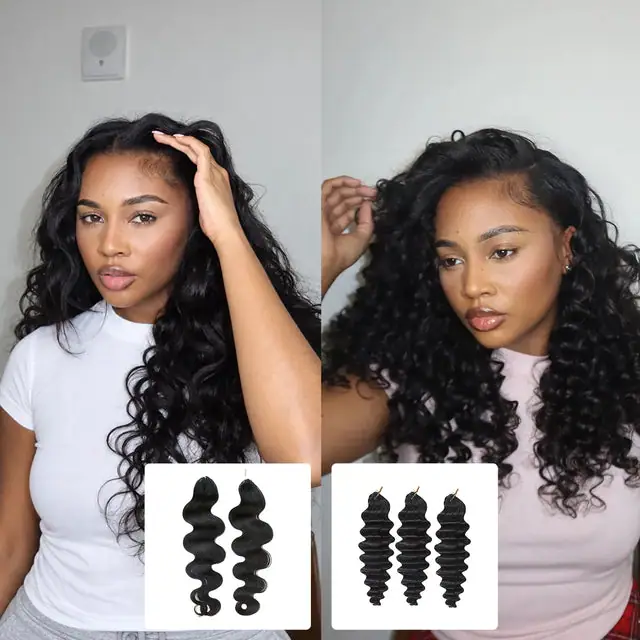
“Glueless” describes an intended way of securing a wig. “Closure” and “frontal” describe parts of its construction. These terms can appear together, so a glueless closure and a glueless frontal may both be valid choices. Start with what you want to do each morning, then compare the actual features of the model.
Start with your daily routine
Decide whether you want to remove the wig every evening, change the part regularly or keep a consistent finished style. Also consider how much of your own hair you want to leave out. Headband, half-wig and open-part designs solve different styling problems; they should not be judged only by whether the product title says “easy.”
Build a short list of non-negotiables: the required cap measurements, a preferred parting position, whether visible lace needs preparation, and the time you want to spend on styling. A product that fits those requirements is a stronger candidate than one with a longer list of marketing features.
Read the lace dimensions precisely
A closure provides a defined lace area around a parting section; a frontal extends across a wider front area. Labels such as 5×5 or 13×6 describe advertised dimensions, usually in inches, but the usable parting shape can differ by model. Check the maker’s diagram and photographs of the inside of the cap. Do not infer a rectangular parting area from the largest measurements alone.
More lace may give you more styling choices, but it is not automatically the better purchase. Think about the styles you actually wear. If you always use the same part, ask what practical benefit the additional lace would provide for you.
Check what “ready” includes
Pre-cut lace, pre-plucked hairlines, adjusted knots and pre-styling are separate features. Confirm which are included in the exact option you selected. Ask for the inside-cap photo and identify the bands, drawstrings, clips or combs used to secure it. An adjustable system still needs to suit your head measurements and preferred placement.
Do not assume a model shown with adhesive in a demonstration is intended for adhesive-free wear, or that every item in a glueless collection has the same preparation. Product-level details are more useful than a collection headline.
A useful side-by-side comparison
For each candidate, record the cap range, usable lace area, included preparation, attachment method, leave-out requirement and return conditions. Mark unanswered fields clearly. If one option is more expensive, identify the construction difference that explains the premium. The best choice for your routine is the one that meets your needs with a manageable amount of preparation.


Have something helpful to share? Be the first to join the conversation.